
What is glazing?
Glazing is one of the most useful finishing techniques I use. Originally something I learned through woodgraining, it has become a practical way to adjust, enrich, or unify existing wood finishes without stripping everything back and starting again.
Rather than replacing or removing what’s there, glazing uses translucent layers of colour to add depth, shift tone, and preserve the character of the underlying surface.
Adjusting color without replacing finishes
Sometimes wood is the right material but the colour isn’t.
The oak mantle below had already been stained and sealed, but the tone didn’t relate well to the staircase or surrounding finishes. Instead of stripping and refinishing, I adjusted the color using custom glaze layers and artist oils to create a richer finish that sat comfortably within the space.
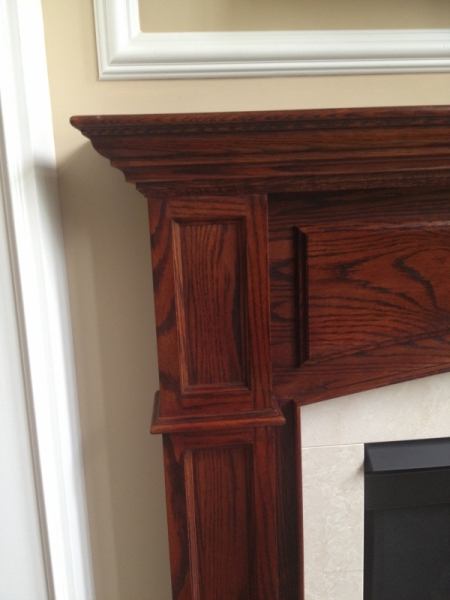
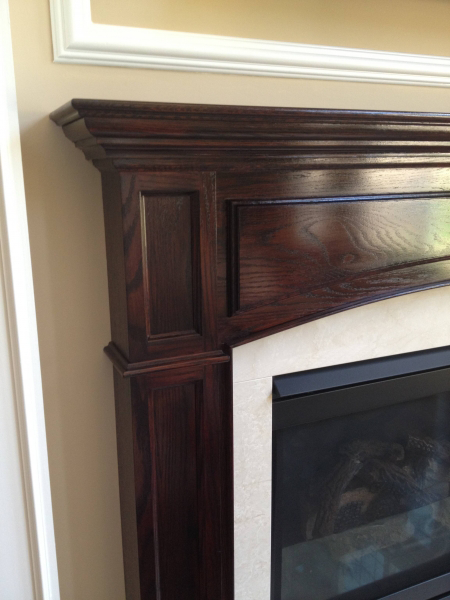
Before and after glaze application
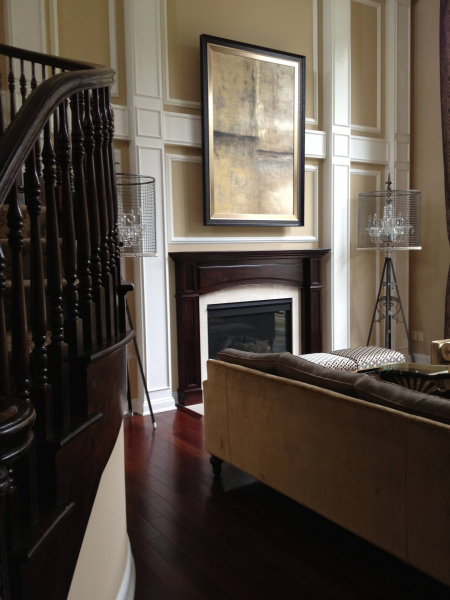
Refinished mantle blended in much better with staircase without need for stripping.
Creating depth and matching across different materials
Glazing is also useful when trying to achieve a richer hardwood appearance or bring different woods together.
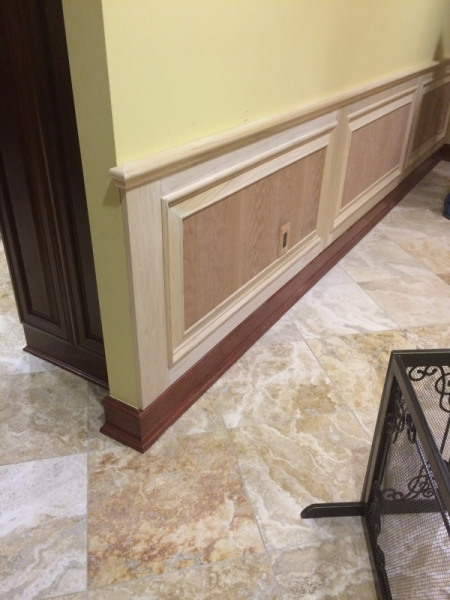
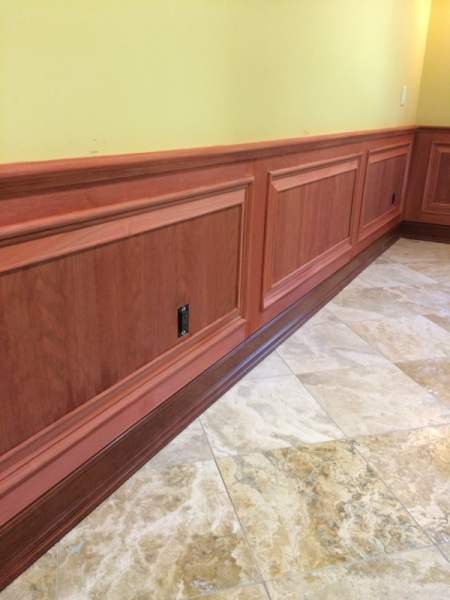
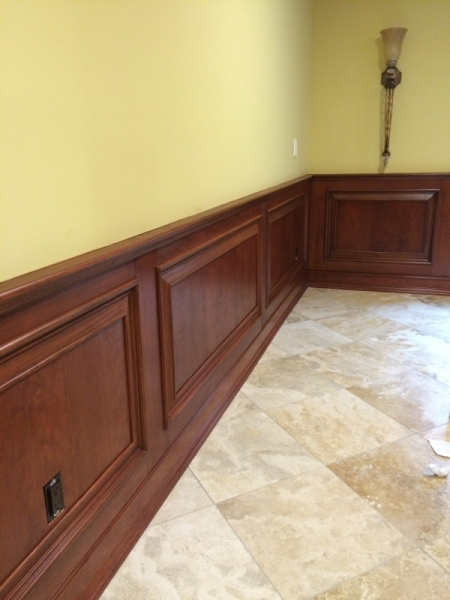
In the example below, a mixture of timber species needed to relate to an existing prefinished baseboard. A custom stain established consistency, then glaze and protective top coats added depth and cohesion.
Practical applications
Glazing can be especially effective on staircases and architectural woodwork where stripping would be difficult, disruptive, or unnecessary.
Because the finish remains translucent, the natural character of the wood is preserved while color and tone can be adjusted to suit surrounding materials.
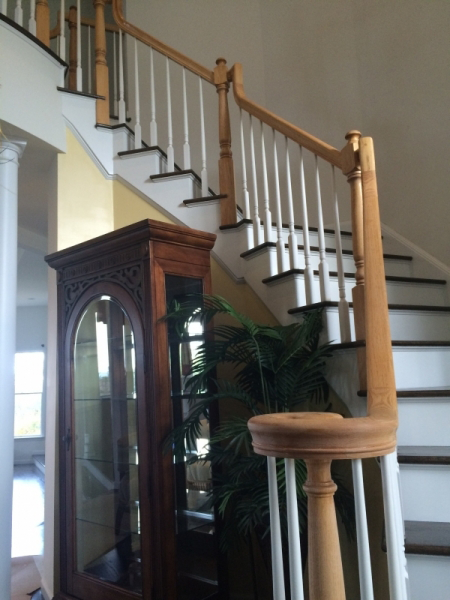
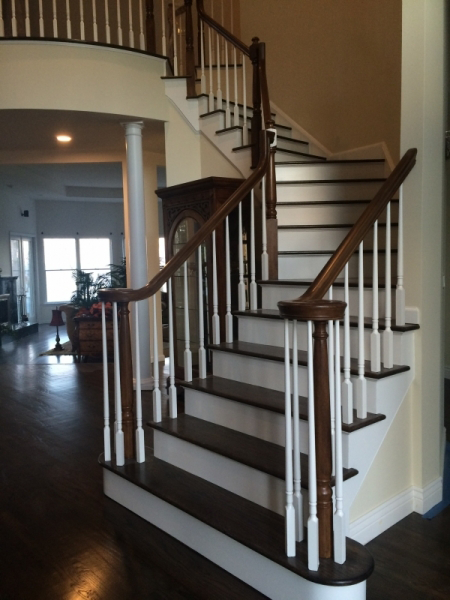
The staircase below shows existing golden oak brought into line with darker refinished elements without replacing the original wood.
Changing tone, not just darkening
Glazing isn’t only for creating richer finishes. It can also be used to soften, lighten, or modernise existing wood.
The dining set below was transformed from golden oak into a lighter finish that suited the surrounding renovation.

In process – original golden oak finish on right side.
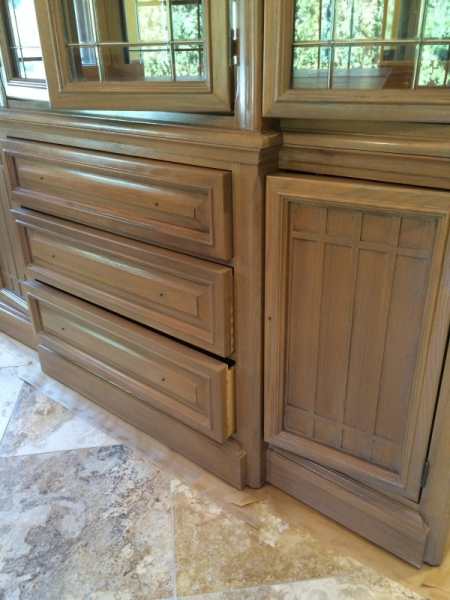
Finished piece
The sheen – from matte through to high gloss – is determined by the protective top coat selected for the project.